
Spur Gear Manufacturers: How Do They Support Efficient Industrial Power Transmission?
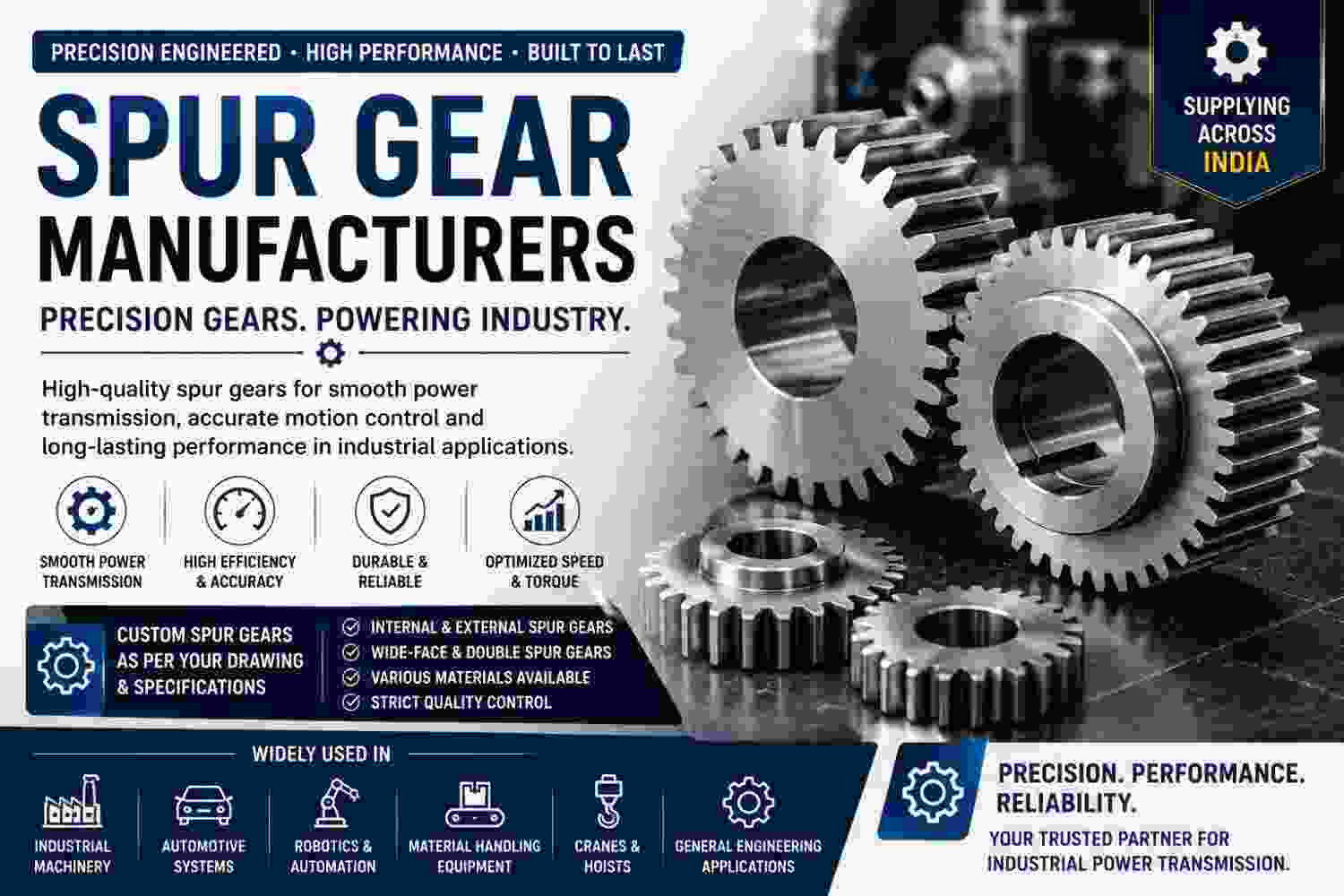
Modern industrial machinery depends on reliable components that can transfer power efficiently, control speed, and maintain synchronized movement. Among the many mechanical components used in power transmission systems, spur gears remain one of the most widely used options because of their simple design, dependable operation, and high efficiency.
Spur Gear Manufacturers produce precision-engineered gears for a wide range of industrial applications, including machinery, automation systems, material handling equipment, and mechanical assemblies. The quality of the gear can directly influence operational performance, equipment reliability, and long-term maintenance requirements.
What Are Spur Gears?
Spur gears are cylindrical gears with straight teeth that are positioned parallel to the gear axis and are primarily used to transmit motion and torque between parallel shafts.
Their straightforward tooth design makes them suitable for many mechanical systems that require consistent speed, controlled movement, and efficient power transmission. When two spur gears mesh together, the teeth transfer rotational force from one shaft to another.
Spur gears are commonly used in industrial machinery because they can provide reliable mechanical performance when properly designed and manufactured. Their simple construction also makes them easier to inspect, maintain, and integrate into different mechanical systems.
How Do Spur Gears Work?
Spur gears work by meshing straight teeth together to transfer rotational motion and mechanical power between parallel shafts.
As one gear rotates, its teeth engage with the teeth of the mating gear. This engagement transfers torque and motion from the driving shaft to the driven shaft.
The size relationship between the gears determines the resulting speed and torque characteristics. A properly selected gear ratio can increase torque, reduce speed, or change the operating characteristics of a mechanical system.
For reliable performance, the gears must be manufactured with accurate tooth geometry and appropriate dimensional control. Proper alignment and correct engagement are also important for smooth operation.
Why Are Spur Gears Important in Industrial Machinery?
Spur gears are important because they provide an efficient and dependable method of transmitting mechanical power between machine components.
Many industrial systems require controlled movement between motors, shafts, and mechanical assemblies. Spur gears help transfer this motion while supporting the speed and torque requirements of the application.
They are commonly selected for systems that require:
- Efficient power transmission
- Controlled speed and torque
- Accurate mechanical movement
- Consistent rotational performance
- Reliable operation in demanding equipment
The simplicity of the design, combined with its practical performance, makes the spur gear an important component in many industrial power transmission systems.
What Are the Main Functions of Spur Gears?
Spur gears perform several important functions in mechanical and industrial equipment.
One of their primary functions is power transmission. They transfer mechanical energy between rotating shafts and help maintain efficient machine operation.
Spur gears can also control speed and torque through the selection of appropriate gear ratios. This allows machinery to achieve operating characteristics that match specific production or performance requirements.
Another important function is synchronization. In mechanical systems where multiple components must move in coordination, spur gears can help maintain accurate and controlled movement.
Properly manufactured gears can also support effective load distribution across the gear teeth, helping reduce excessive stress and contributing to long-term operational performance.
What Types of Spur Gears Are Available?
Different types of spur gears are available to meet varying mechanical and industrial requirements.
Standard spur gears are widely used in general machinery and common power transmission applications. Their simple external tooth configuration makes them suitable for a broad range of mechanical systems.
Internal spur gears have teeth positioned on the inner circumference of the gear. They are often used in assemblies where a compact mechanical arrangement is required.
Double spur gears are designed for specialised mechanical requirements and can support specific transmission configurations.
Wide-face spur gears are suitable for applications where increased contact area and load-handling capability are important.
The most suitable gear type depends on factors such as load, speed, shaft arrangement, available installation space, and overall machine design.
Why Is Precision Important in Spur Gear Manufacturing?
Precision is important because the accuracy of a spur gear affects how smoothly and reliably it performs during operation.
Gear teeth must be manufactured with the correct geometry to ensure proper engagement. Inaccurate dimensions or poor tooth profiles can contribute to uneven contact, increased wear, vibration, and reduced operating efficiency.
Spur Gear Manufacturers use controlled manufacturing and inspection processes to achieve the dimensional accuracy required for industrial applications.
Precision manufacturing can help support smoother motion, better load distribution, and more consistent mechanical performance. It can also contribute to reduced maintenance requirements when the gear is correctly selected and installed.
Which Materials Are Used to Manufacture Spur Gears?
Spur gears can be manufactured from different materials depending on the application, operating environment, load requirements, and expected service conditions.
Common materials include:
- Alloy steel
- Carbon steel
- Stainless steel
- Bronze
- Engineered plastics
Metal gears are commonly selected for demanding industrial applications where strength and durability are important. The material selection may depend on the torque requirements and operating conditions of the machinery.
Engineered plastics can also be suitable for specific applications where reduced weight or particular operating characteristics are required.
Selecting the correct material is an important part of gear design because the material can influence durability, wear resistance, and long-term performance.
What Are the Advantages of High-Quality Spur Gears?
High-quality spur gears can support smooth mechanical operation, consistent power transmission, and dependable equipment performance.
Accurate manufacturing helps ensure that the gear teeth engage properly. This can contribute to improved operating stability and reduced unnecessary wear.
Other important advantages can include:
- High dimensional accuracy
- Efficient power transmission
- Long operational life
- Consistent mechanical performance
- Reduced maintenance requirements
- Custom manufacturing possibilities
- Suitability for different load conditions
The quality of the manufacturing process is particularly important when gears are used in machinery where accuracy and reliability directly affect production performance.
Which Industries Use Spur Gears?
Spur gears are used across many industries because mechanical power transmission is required in a wide range of machines and equipment.
Common applications include industrial machinery, automation systems, automotive equipment, robotics, and material handling systems.
They can also be used in conveyors, mechanical assemblies, cranes, hoists, milling equipment, and other systems that require controlled rotational movement.
The exact gear design depends on the specific application. Factors such as torque, operating speed, load, and duty cycle should be considered before selecting a suitable gear.
Can Spur Gears Be Custom Manufactured?
Custom spur gears can be manufactured according to specific size, material, tooth, and application requirements.
Not every industrial machine uses a standard gear size. Custom machinery may require components designed to match particular shaft arrangements, gear ratios, load conditions, or installation dimensions.
Custom manufacturing can involve reviewing the technical requirements of the application before selecting the appropriate design and production approach.
Important specifications may include gear dimensions, tooth configuration, material, operating conditions, and required mechanical performance.
Working with experienced Spur Gear Manufacturers can help ensure that the final component is suitable for the intended mechanical system.
How Do You Choose the Right Spur Gear for an Application?
The right spur gear should be selected according to the mechanical and operating requirements of the equipment.
Important factors can include the required speed, torque, load, gear ratio, material, operating environment, and available installation space.
The shaft arrangement should also be considered because spur gears are designed primarily for power transmission between parallel shafts.
Selecting a gear without considering the complete operating requirement can lead to poor performance or unnecessary wear. A proper technical review helps ensure that the gear configuration matches the needs of the machinery.
What Are Common Problems With Spur Gears?
Common spur gear problems can include wear, improper alignment, excessive vibration, noise, and damage caused by unsuitable operating conditions.
Many of these issues can be influenced by factors beyond the gear itself. Incorrect installation, poor alignment, inadequate maintenance, or using a gear outside its intended operating limits can affect performance.
Precision manufacturing and correct gear selection can help reduce the risk of premature problems. Regular inspection and appropriate maintenance can also support longer service life.
Understanding the operating requirements of the equipment is essential for selecting a suitable gear and maintaining reliable performance.
Why Should You Choose a Reliable Spur Gear Manufacturing Partner?
A reliable manufacturing partner can help ensure that spur gears are produced according to the technical requirements of the application.
From material selection and dimensional accuracy to custom specifications and quality control, every stage of manufacturing can influence the performance of the final component.
Spur Gear Manufacturers play an important role in supporting industrial machinery with components designed for efficient power transmission and consistent mechanical operation.
Whether the requirement involves a standard industrial gear or a custom-designed component, the right manufacturing approach can help achieve reliable performance and long-term durability.
For modern industrial applications, spur gears remain a practical and effective solution for transmitting power, controlling motion, and supporting efficient mechanical systems. Choosing a precision-engineered gear that matches the requirements of the application is an important step toward dependable machinery performance.

