
How Do You Select a Worm Gear and Shaft for High-Torque Industrial Applications?
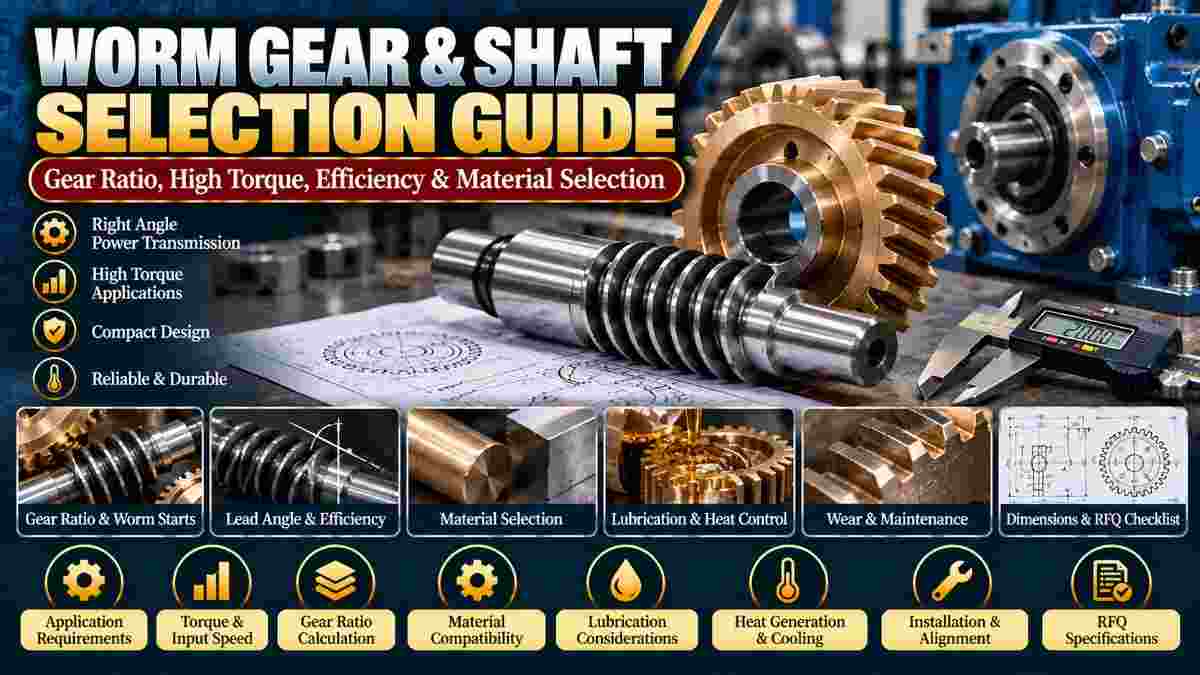
Are you selecting a worm gear and shaft for a conveyor, industrial machine, or speed reduction system? Choosing the wrong gear ratio, material, or tooth geometry can lead to overheating, excessive wear, and premature failure.
Worm gear and shaft selection depends on the required gear ratio, input speed, output torque, load conditions, material compatibility, efficiency, lubrication, and installation requirements.
GearVeda Engineering offers worm gears and shafts for industrial power transmission applications.
What Is a Worm Gear and Shaft?
A worm gear assembly consists of a screw-shaped worm shaft that meshes with a toothed worm wheel to transmit rotational power between shafts, typically arranged at right angles.
Common applications include:
-
Conveyor drives.
-
Packaging machinery.
-
Industrial mixers.
-
Material handling systems.
-
Automation equipment.
-
Speed reduction mechanisms.
Explore Worm Gear and Shaft for product information.
How Does a Worm Gear and Shaft Work?
The rotating worm shaft engages the teeth of the worm wheel, reducing rotational speed while increasing available output torque, subject to mechanical losses.
Its sliding tooth contact allows substantial speed reduction within a compact arrangement.
However, sliding friction also produces heat and makes lubrication particularly important.
How Do You Calculate the Worm Gear Ratio?
The worm gear ratio is calculated by dividing the number of worm wheel teeth by the number of starts on the worm shaft.
For example, a worm wheel with 40 teeth paired with a single-start worm provides a 40:1 reduction ratio.
A two-start worm paired with the same wheel provides a 20:1 ratio, assuming compatible geometry.
The required ratio depends on input RPM and desired output speed.
How Do You Select a Worm Gear for High Torque?
Select the gear assembly according to transmitted power, required output torque, operating speed, and the application's service conditions.
Consider:
-
Motor power.
-
Input RPM.
-
Required output torque.
-
Starting loads.
-
Shock loading.
-
Operating hours.
-
Duty cycle.
-
Mechanical efficiency.
The gear teeth, shaft, bearings, and housing must all support the actual loads.
What Is Worm Gear Lead Angle?
Lead angle is the angle formed by the worm's helical thread relative to a plane perpendicular to the worm axis, influencing sliding action, efficiency, and back-driving behavior.
It depends on worm geometry, including the lead and pitch diameter.
Lead angle should be selected through proper engineering calculations rather than using a universal value.
How Does Lead Angle Affect Worm Gear Efficiency?
Lead angle affects frictional losses and mechanical efficiency because worm gears transmit motion through substantial sliding contact.
Efficiency also depends on:
-
Rotational speed.
-
Gear ratio.
-
Surface finish.
-
Material pairing.
-
Lubrication.
-
Operating temperature.
Higher efficiency can reduce heat generation, but the complete design must satisfy load requirements.
Which Materials Are Suitable for Worm Gears and Shafts?
A common material combination uses a hardened steel worm shaft with a suitable bronze worm wheel.
Depending on the application, options may include:
-
Hardened alloy steel worm shafts.
-
Phosphor bronze worm wheels.
-
Aluminum bronze worm wheels.
-
Other engineered material pairings.
GearVeda's Worm Gear and Shaft page describes steel and bronze options.
Final material selection depends on loading, wear, lubrication, and operating conditions.
Why Is Lubrication Important for Worm Gears?
Lubrication reduces friction, manages wear, and helps control heat at the sliding tooth surfaces.
Buyers should evaluate:
-
Lubricant type.
-
Viscosity.
-
Operating temperature.
-
Material compatibility.
-
Lubrication method.
-
Maintenance intervals.
Some bronze-containing gear systems require careful lubricant-additive compatibility checks.
Follow the gearbox or equipment manufacturer's recommendations.
Why Do Worm Gears Overheat?
Worm gears may overheat because of excessive loading, inadequate lubrication, high sliding friction, poor alignment, or insufficient heat dissipation.
Common warning signs include:
-
Excessive housing temperature.
-
Abnormal noise.
-
Oil discoloration.
-
Increased vibration.
-
Accelerated tooth wear.
Check the operating load and complete assembly before replacing the gears.
Can Worm Gears Prevent Reverse Rotation?
Some worm gear designs resist back-driving under particular conditions, but self-locking must never be assumed without engineering verification.
Back-driving behavior depends on lead angle, friction, lubrication, vibration, and operating conditions.
For lifting or safety-critical equipment, use an appropriate independent braking or load-holding system.
A worm gear should not be treated as a guaranteed safety brake.
How Do You Identify Worm Gear and Shaft Wear?
Common signs include excessive backlash, pitted teeth, unusual vibration, increased noise, and inconsistent output movement.
Inspect:
-
Worm thread surfaces.
-
Worm wheel teeth.
-
Bearing condition.
-
Shaft alignment.
-
Lubricant contamination.
-
Surface scoring.
-
Tooth contact patterns.
Recurring damage may indicate a problem with the complete transmission system.
What Should You Check Before Ordering Replacement Worm Gears?
Replacement parts must match the original gear geometry, shaft arrangement, materials, and operating requirements.
Check:
-
Gear ratio.
-
Worm starts.
-
Worm wheel tooth count.
-
Module and tooth geometry.
-
Center distance.
-
Shaft diameter.
-
Shaft length.
-
Bore and keyway.
-
Rotation direction and thread hand.
-
Material specifications.
Provide approved drawings or existing component samples whenever possible.
What Factors Affect Worm Gear and Shaft Prices?
Prices depend on dimensions, gear ratio, materials, manufacturing precision, heat treatment, and order quantity.
Important factors include:
-
Worm and wheel size.
-
Tooth geometry.
-
Steel and bronze grades.
-
Machining complexity.
-
Hardening requirements.
-
Inspection requirements.
-
Customization.
Compare quotations using identical technical specifications.
What Should You Include in a Worm Gear and Shaft RFQ?
A complete RFQ should describe the required gear geometry, mechanical loads, materials, and operating conditions.
Provide:
-
Application and machine type.
-
Required gear ratio.
-
Motor power and input RPM.
-
Required output torque.
-
Operating duty cycle.
-
Worm starts and wheel tooth count.
-
Center distance and module.
-
Shaft dimensions.
-
Preferred materials.
-
Lubrication conditions.
-
Technical drawings or samples.
-
Quantity and delivery location.
Accurate information helps suppliers evaluate the design.
Why Should Buyers Consider GearVeda Engineering?
GearVeda Engineering offers worm gears and shafts for industrial power transmission and customized machinery applications.
Its product information covers single-start and multi-start worm configurations, worm wheel materials, and application-specific designs.
Explore Worm Gear and Shaft for available options.
Confirm dimensions, materials, achievable tolerances, inspection documentation, and delivery requirements before ordering.
What Are the Most Frequently Asked Questions About Worm Gears?
Common buyer questions concern ratios, efficiency, materials, and replacement compatibility.
Are Worm Gears Suitable for High-Torque Applications?
Yes, when the assembly is engineered for the required loads, speed, efficiency, and thermal conditions.
Which Material Is Best for a Worm Wheel?
Bronze alloys are commonly used with steel worms, but suitability depends on loading, lubrication, and wear requirements.
Can a Worm Gear Be Self-Locking?
Some designs resist back-driving under specific conditions, but this behavior is not guaranteed or a substitute for a safety brake.
Do Worm Gears Require Regular Lubrication?
Yes. Appropriate lubrication and maintenance are essential for managing sliding friction and wear.
Can Worm Gears and Shafts Be Customized?
Yes. Custom dimensions, ratios, materials, and configurations may be available subject to manufacturing capability.
How Can You Request Worm Gears and Shafts From GearVeda?
You can request a quotation by sharing your application, gear ratio, operating speed, torque requirements, dimensions, materials, and quantity.
For replacement applications, include photographs, drawings, or existing samples.
Explore Worm Gear and Shaft or contact GearVeda Engineering to discuss your requirements.
Technical Note: Final selection should follow approved engineering calculations, tooth-strength requirements, thermal ratings, lubrication specifications, and application-specific safety requirements.

